
What are Fibroids?
Uterine fibroids are benign lumps that grow in the uterus. Almost 50% of women will get uterine fibroids by the age of 50. These are benign (non-cancerous) lumps but can lead to symptoms that can affect the quality of your life.
London Gynaecology, a fibroids centre of excellence
London Gynaecology is proud to have advanced expertise in fibroids, offering the latest procedures. Our team includes multiple expert surgeons with advanced skills in laparoscopic and robotic surgery, giving patients access to cutting-edge, minimally invasive options, including the latest in robotic-assisted procedures.
Established fast-track surgical pathways with leading private hospitals, ensure timely access to theatre for those who need it. In addition, our in-house interventional radiology team provides non-surgical options such as uterine artery embolisation, allowing patients access to the full spectrum of fibroid treatments under one roof.
The exact cause of fibroids is not known, but they are more common in Afro-Caribbean women. Fibroids usually grow slowly and can sometimes reach impressive size even up to the size of a full term pregnancy!
Fibroids are oestrogen-dependent and therefore are uncommon before the age of 20 and tend to shrink after menopause.
Fibroids can be classified as small (less than 4 cm), medium (4-8 cm) or large (greater than 8 cm). They are also classified depending on the location:
- Submucous fibroids: Fibroids that grow inwards within the uterine cavity, more likely to cause bleeding problems, also more amenable to Hysteroscopic Surgery.
- Intramural fibroids: Fibroids that grow within the wall of the uterus
- Subserous fibroids: Fibroids that grow outwards, more likely to cause pressure symptoms. Intramural and subserous fibroids are more amenable to laparoscopic surgery.
Fortunately, fibroids do not usually interfere with chances of getting pregnant Most of the fibroids are small and do not interfere with the cavity of the uterus or the fallopian tubes. In general, if the fibroids are small (smaller than 6cm) AND if the cavity is normal AND if the fallopian tubes are patent (open), there is no cause to worry.
There is some evidence that Myomectomy is associated with improved pregnancy and fertility outcome. This is dependent on various factors such as previous history, location and size of fibroids.
Fibroids can sometimes be associated with risks during antenatal period, labour and post-partum.
Fibroids can increase the risk of early pregnancy loss and preterm birth especially if they are large or interfere with the uterine cavity (submucous fibroids).
Fibroids tend to increase in size with increased blood supply of pregnancy. This can lead to increased discomfort. Increase in size is also associated with ‘Red degeneration of Pregnancy’. This happens due to rapid increase in the size of fibroids where the central area of a fibroid does not get enough blood supply and undergoes ‘necrosis’. This is associated with pain and tenderness over the fibroid. Sometimes admission to the hospital and rest is required for pain relief, anti-inflammatory and supportive treatment.
Fibroids in the lower part of the uterus can lead to malposition such as transverse lie or breech presentation necessitating Caesarean Section. Caesarean Section can sometimes be difficult and complex due to location of the fibroids.
Post-delivery, fibroids can interfere with contraction of the uterus leading to post-partum haemorrhage.
The following tests can help ensure pregnancy will not be affected:
- Ultrasound scan can help in assessment of size, numbers and location of fibroids in relation to the uterine cavity and fallopian tubes.
- Hycosy (HYstero-Salpingo COntrast SonographY) scan is where a contrast in injected into the uterine cavity and visualised on scan coming out of the fallopian tubes. This helps in more accurate assessment of uterine cavity and tubal patency.
Fiboids are very common and most fibroids do not cause any symptoms. Some fibroids (approximately 40%) will cause some symptoms and these symptoms depend on location of fibroids, their size, changes within the fibroids and pregnancy status.
Submucous fibroids are often likely to cause bleeding problems while intramural and subserous fibroids tend to cause pressure symptoms. Fibroids tend to grow during pregnancy due to presence of oestrogen and consequently fibroids are more likely to cause symptoms during pregnancy.
Fibroids symptoms include:
Abnormal Uterine Bleeding: Fibroids (often submucous) can cause bleeding problems such as heavy periods (menorrhagia) or bleeding in between periods. Sometimes the bleeding is associated with heavy clots and spasmodic pain. Blood loss can also lead to iron deficiency and anaemia.
Pressure symptoms: Fibroids can press on the surrounding organs such as bladder and bowel. This can lead to urinary frequency and constipation. Occasionally, pressure on the bladder neck can lead to urinary retention. Large fibroids can cause pressure on pelvic blood vessels which can lead to swelling of legs, deep vein thrombosis and back pressure on kidneys.
Pain: Fibroids can cause heaviness and fullness in the pelvic area. Large fibroids can cause mass and pressure effects. Sometimes the fibroids can outgrow their own supply and can undergo central degeneration and become extremely painful. Some of the fibroids can cause dyspareunia (pain during sex) because of their position.
Infertility: Fibroids usually do not lead to fertility issues and most women with fibroids will achieve pregnancy without any difficulty. In fact, many of the fibroids are diagnosed on ultrasound scans performed during pregnancy. Submucous fibroids can obstruct the uterine cavity and prevent implantation very similar to an Intrauterine Device (IUD). Some fibroids can obstruct the fallopian tubes and cause difficulty in conceiving. There is some evidence that myomectomy can improve fertility rates by approximately 50%. Removal of fibroids larger than 6cm and submucous fibroids will improve fertility rates and risk of complication during pregnancy.
Pregnancy and Fibroids: Most women with fibroids will have straight-forward course in pregnancy. However, the fibroids tend to grow in size in pregnancy due to high levels of oestrogen. Occasionally, they will outgrow their own blood supply and become painful due to a condition called ‘red degenration’. Submucous fibroids can occasionally cause early pregnancy complications such as bleeding and pregnancy loss due to implantation on a fibroid and not enough blood supply. Later on in pregnancy, if the fibroids are low in the uterus, malpositions such as breech and transverse lie can occur or indeed slow progress in labour and a caesarean section may be necessary. Caesarean section sometimes can be complex if the fibroids are in the way. They can also interfere with uterine contractions and lead to excessive bleeding after delivery.
Ultrasound scan often is the best investigation. It can obviously make the diagnosis but can also tell us about numbers, size and location. It can also help with planning treatment.
For small fibroids, a transvaginal scan is more useful. For large fibroids, a transabdominal scan may be needed in addition.
MRI scan can sometimes be needed for more accurate description of size and location and for planning of surgery. MRI can be useful if there is suspicion of malignant transformation (Leiomyosarcoma). A CT scan may be needed if there is pressure on the kidneys causing dilatation.
Blood tests such as Haemoglobin levels and iron profile may be required to assess the degree of anaemia.
Hysteroscopy may be required if there are bleeding symptoms and presence of submucous fibroids. Hysteroscopy is camera inspection of the uterine cavity. This examination can be used not only for diagnosis of submucous fibroids, but they can also be treated through this approach. For more information on hysteroscopy click here.
Book your fibroids consultation today
Book a consultation with one of our fibroid specialists to explore the best treatment options for you.
Fibroid treatment options
Treatment depends on size and location of fibroids and symptoms caused. Asymptomatic fibroids do not need treatment.
Robotic Surgery
Minimally invasive technique allowing precise removal of fibroids with smaller incisions, reduced blood loss, and faster recovery
Hysteroscopy
Suitable for intra-cavity (submucous) fibroids
Uterine Artery Emobilisation
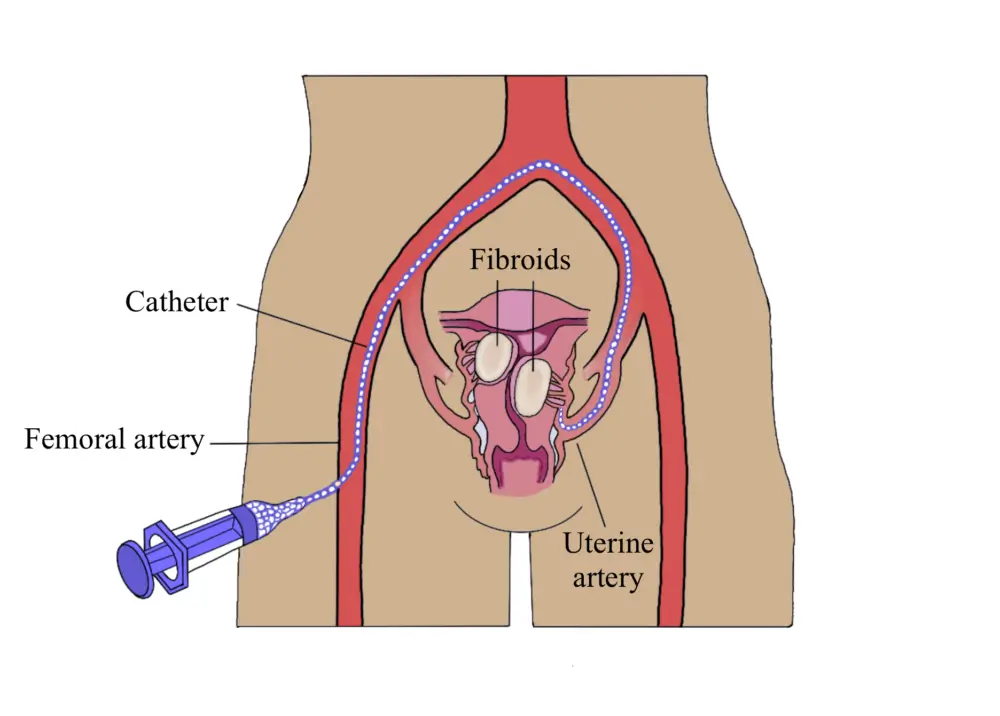
A non-surgical treatment, suitable for most fibroids, except very large and small, that shrinks fibroids by blocking their blood supply via a targeted radiological procedure.
Open myomectomy
Traditional surgical removal of fibroids via an abdominal incision, typically reserved for very large or multiple fibroids
Laparoscopic Surgery
Laparoscopy is looking inside the abdomen with a telescope (laparos = abdomen, scopy = to have a look)
Hysterectomy
A permanent solution suitable to those with severe symptoms who have completed their family
Management of symptoms
Monitoring of fibroids and management of symptoms to reduce heaviness of periods and treat anaemia
Meet the team
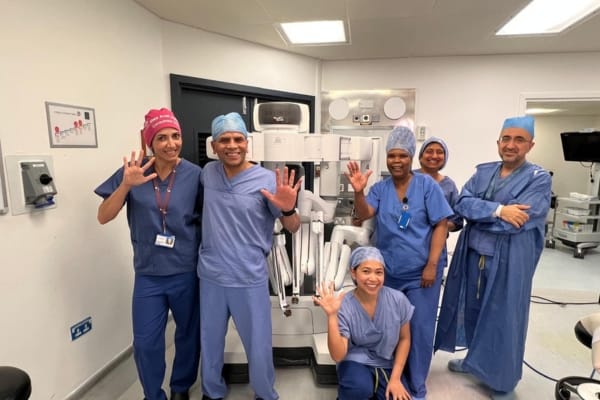
Our team of expert consultant gynaecologists, sonographers and interventional radiologist are highly experienced in diagnosing and treating fibroids. We’re here to support you at every stage of your journey.


Other related conditions and treatments

Pelvic Pain Ultrasound Scan
A detailed pelvic ultrasound scan to investigate possible causes of pelvic pain.
Fibroid Ultrasound Scan
A specialist pelvic ultrasound scan to assess uterine fibroids, including size, number and location.
Fertility Ultrasound Scan
A fertility pelvic ultrasound scan and a follicle tracking ultrasound scan are commonly done before pregnancy, especially when assessing fertility or trying to conceive.

Robotic-Assisted Surgery

Robotic-assisted myomectomy
Minimally invasive technique allowing precise removal of fibroids with smaller incisions, reduced blood loss, and faster recovery. Book an appointment Call us When is robotic surgery…

Outpatient Hysteroscopy
As an outpatient procedure, an outpatient hysteroscopy is performed in a treatment room in the clinic and lasts between 5 and 30 minutes.

Hysterectomy
A hysterectomy is a surgical procedure to remove the uterus. It may be recommended to treat fibroids, heavy bleeding, endometriosis, or other gynaecological conditions. After a...

Open Myomectomy
Myomectomy (Myoma = fibroids, ectomy = removal) literally means surgical removal of fibroids. This is the procedure of choice for women who have symptomatic fibroids and...
Uterine Fibroid Embolisation
Uterine artery embolisation for fibroids is a minimally invasive procedure that involves blocking the blood supply to Uterine Fibroids, causing them to shrink and alleviate related...

Hysteroscopy procedure information and costs

Hysteroscopy
A hysteroscopy is an examination of the inside of the uterus (womb) using a fine telescope.

Laparoscopic Surgery
Laparoscopy is looking inside the abdomen with a telescope (laparos = abdomen, scopy = to have a look). This procedure is used to make a diagnosis...

Fibroids monitoring
Fibroids procedure information and costs