
HRT
Menopause is the period in a woman’s life when menstruation ceases. In normal cases this usually occurs after the age of 45.
During this time ovarian function declines and periods become irregular, unpredictable and eventually stop. This decline in ovarian function means the decreased release of hormones oestrogen and progesterone, and this change in hormone level causes menopause symptoms such as hot flushes, night sweats, mood swings, lack of libido and vaginal dryness.
To support the body through menopause, many women choose hormone replacement therapy (HRT) which replaces the hormones that the ovaries were producing so that the symptoms are minimised.
All HRT preparations contain oestrogen which is what is needed to be replaced to reduce the symptoms of menopause. If you do not have a uterus (after having hysterectomy) then you can take oestrogen only preparations. For all other women the hormone progesterone needs to be taken as well since oestrogen leads to thickening of the lining of the womb (endometrium) which can lead to bleeding and increase the risk of endometrial cancer.
Testosterone can also be prescribed for women experiencing low sexual drive where HRT alone is not effective.
The main benefits of HRT are that it helps to relieve menopausal symptoms. HRT can also help in the prevention of osteoporosis and cardiovascular disease in peri and post-menopausal women.
The Cochrane data-analysis have shown a reduction in cardiovascular events and deaths in women taking either oestrogen only or combined HRT within 10 years of menopause or under 60 years of age.
In addition to this the Cochrane group and the follow up data from WHI found that there doesn’t appear to be an increased risk in cardiovascular events or mortality in women initiating HRT more than 10 years after the menopause.
The risks of HRT are dependent on the woman taking into consideration age, weight, medical and family history so should be individualised.
The subject of breast cancer risk with combined HRT was raised after the Women’s Health Initiative (WHI) study in 2012. However, the long-term study published in 2020 has shown that for most women the benefits outweigh the risks. This can be found on the British Menopause Society (BMS) website.
Some types of tablet HRT can increase the risks of blood clots and stoke (this risk is less with transdermal use of HRT where it is given through the skin).
There are a number of ways that HRT can be taken.
Combination preparations: These can be taken in the form of tablets or patches. If you are perimenopausal this is taken as a sequential combined HRT (with a regular monthly withdrawal bleed). If you are postmenopausal this can be taken as a continuous preparation.
It is recommended to start with the lowest dose and increase if there has been no effect on symptoms.
Please note for perimenopausal women it is important to use contraception on top of HRT since the hormone doses are not effective for contraceptive purposes!
Bleeding can be noted in the first 3 months but should settle. Symptoms of beast tenderness, bloating can also be experienced. If side effects are not controlled then you can consider changing preparations.
Tablets: the most common way to take HRT. Daily tablets can either be oestrogen-only or combined HRT. The risk of blood clots is higher with tablets than with other forms of HRT.
Skin patches: these are small patches that are stuck to the skin, usually below the waist, and replaced every few days. Patches will survive the shower, bathing and swimming, and may be a better option if you don’t want to take a tablet every day. Patches may allow you to avoid some common side effects such as indigestion and they also don’t increase the risk of blood clots.
Oestrogen gel: a gel that is applied to the body, usually the arms or legs, daily. Similar to the patches, gel avoids an increased risk of blood clots. The gel comes in a pump pack and you will be advised as to how much you need to use. However, if you haven’t had a hysterectomy you will need to take progestogen separately to reduce your risk of endometrial cancer.
Implants: a pellet-like implant can be inserted under your skin and gives a gradual release of HRT over several months before needing to be replaced. Progestogen will need to be taken separately too.
HRT should always be taken under medical supervision and should be reviewed annually. With appropriate supervision, there is no reason why HRT cannot be continued at least up to 60 years of age.
There are a number of ways that HRT can be taken.
Combination preparations: These can be taken in the form of tablets or patches. If you are perimenopausal this is taken as a sequential combined HRT (with a regular monthly withdrawal bleed). If you are postmenopausal this can be taken as a continuous preparation.
Oestrogen: This is available as tablets, patches, gel, or spray.
Progestogens: This is available as tablets, or as an intrauterine device. If you are perimenopausal, progestogens are given as part of a week cycle of oestrogen to lead to a 4 weekly bleed. If you are postmenopausal then progestogen is given every day.
Vaginal: This is especially beneficial if you are suffering from vaginal and bladder symptoms and involves topical oestrogen and not wanting to take one of other forms of HRT
It is recommended to start with the lowest dose and increase if there has been no effect on symptoms.
Please note for perimenopausal women it is important to use contraception on top of HRT since the hormone doses are not effective for contraceptive purposes!



How can London Gynaecology help you?
Search based on phrases or ask a specific question about your health.
Our Premium Clinic Locations
Discover our network of specialised gynaecology clinics across the UK, offering exceptional care in elegant, comfortable environments.

Moorgate Clinic
Ground Floor, 15 Austin Friars, London, EC2N 2HE
London Gynaecology in the City of London offers expert women’s healthcare, same-day appointments, and advanced diagnostics in...
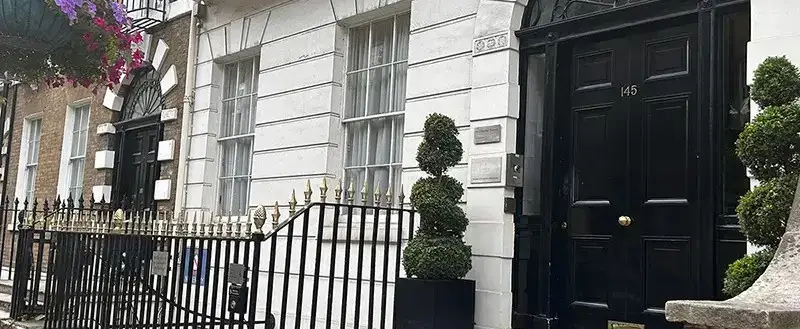
Harley Street
145 Harley Street, W1G 6BJ, London
London Gynaecology at Harley Street provides world-class private women’s healthcare, fertility support, and advanced gynaecology services in...

The Portland Hospital
212 Great Portland St, London, W1W 5QN
London Gynaecology at The Portland Hospital offers comprehensive private women’s healthcare, surgery, expert consultations, and specialist treatments...

Richmond
Ground Floor, 26 Paradise Rd, Richmond TW9 1SE
Welcome to London Gynaecology at Richmond. Our newest addition to our family of clinics.